Roofs & Gutters
What Causes Black Streaks on Roof Shingles?
The Short Answer
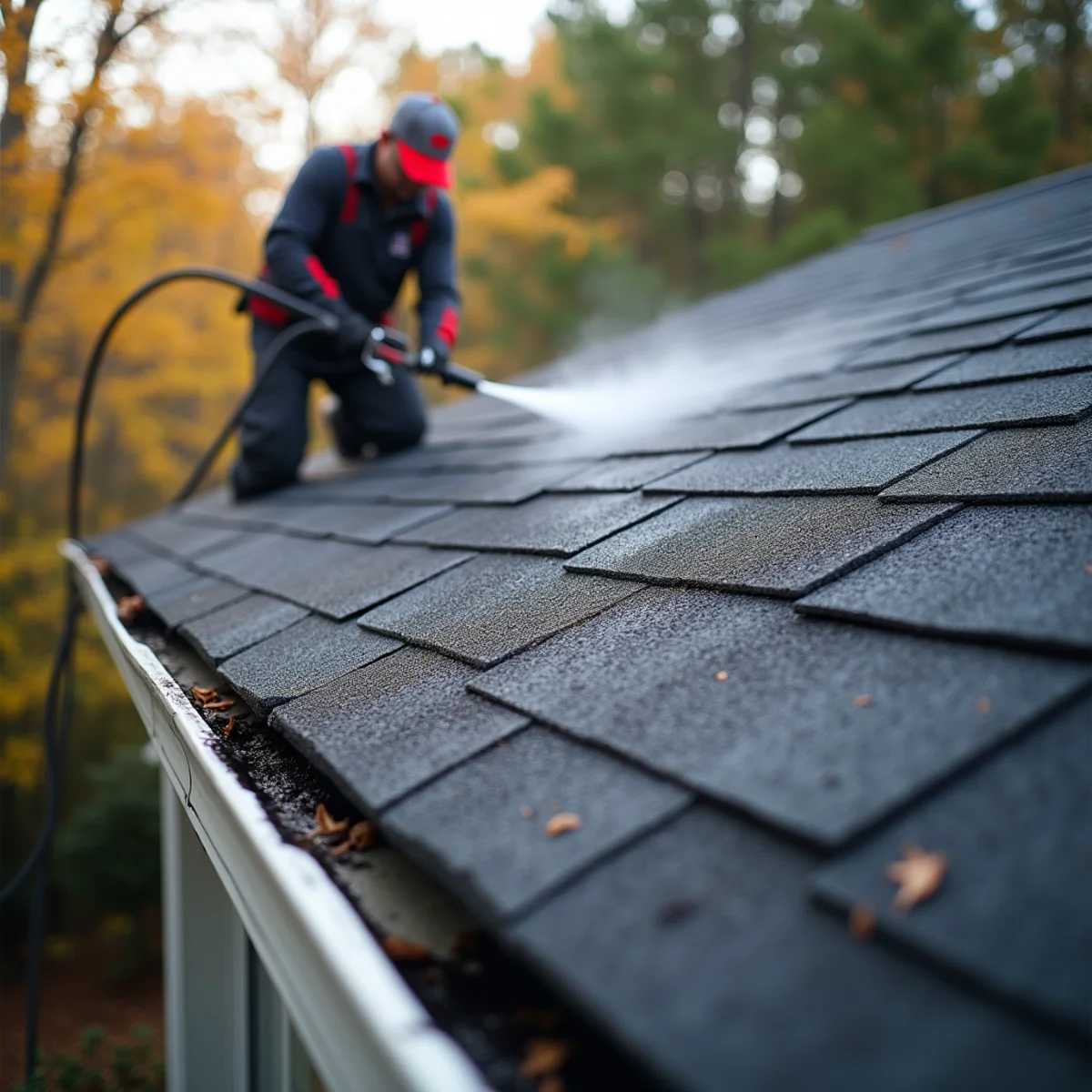
Black streaks on asphalt shingles are almost always Gloeocapsa magma, an airborne algae that feeds on the crushed limestone filler inside the shingles themselves. It thrives in Georgia's humid climate and shows up first on shaded and north-facing slopes, where the roof stays damp longest. The streaks are more than a cosmetic issue — a darker roof absorbs more heat, and the growth holds moisture against the shingle surface — but they usually don't mean the roof is failing. A low-pressure soft wash treatment removes the algae safely. Pressure washing shingles does not.
It's Not Dirt — It's a Living Algae
The black streaks on your roof aren't soot, mildew stains, or grime washing off the shingles. In nearly every case they're colonies of Gloeocapsa magma, a blue-green algae that travels through the air as spores, lands on rooftops, and settles in wherever conditions suit it.
The algae itself isn't black. As colonies mature, they build a dark protective sheath that shields them from UV light — and that sheath is what you see from the street. By the time streaks are visible from your driveway, the growth has typically been established for a while.
That's also why the streaks run vertically. Rain carries spores and loosened colonies downslope, seeding new growth along the water's path. The result is the familiar tiger-stripe pattern that starts near the ridge and reaches toward the gutters.
Why the Algae Feeds on Your Shingles
Modern asphalt shingles aren't pure asphalt. Manufacturers blend in crushed limestone as a filler, which adds weight and fire resistance at a reasonable cost. Gloeocapsa magma happens to consume the calcium carbonate in that limestone — so the streaks aren't just sitting on your roof, they're slowly feeding on part of it.
This is why the problem got noticeably more common after limestone filler became standard in shingle manufacturing, and why the streaks keep spreading if nothing interrupts them. The food source is built into the roof.
It's worth keeping perspective, though. The algae grazes on filler at the surface; it isn't boring holes through your roof deck. A streaked roof is usually a roof with a maintenance issue, not a roof emergency.
Why Georgia Roofs Streak Faster
Gloeocapsa magma needs moisture, warmth, and food. Georgia supplies all three generously. Our long, humid summers keep roof surfaces damp with dew well into the morning, and the wooded lots common around Woodstock, Roswell, and the rest of Cherokee County add shade that slows drying even more.
That's why streaks almost always appear first on north-facing slopes and any section shaded by mature trees. Those areas hold moisture longest, so colonies establish there and expand outward. A south-facing slope in full sun may stay clean for years while the shaded side of the same roof turns dark.
- North-facing slopes — the least direct sun, the slowest to dry after dew or rain
- Sections under tree canopy — shade plus organic debris that traps moisture
- Roofs near ponds, creeks, or low-lying humid pockets
- Neighborhoods where nearby roofs are already streaked — spores travel house to house on the wind
Are the Streaks Actually Hurting Your Roof?
The honest answer: black streaks are primarily a curb appeal and efficiency problem, with some longer-term wear concerns — not an immediate threat. A heavily streaked roof is darker, and darker surfaces absorb more heat. In a Georgia summer, that can mean a hotter attic and an air conditioner working harder than it needs to.
There's also the moisture angle. Established algae holds dampness against the shingle surface, and in shaded areas it can pave the way for moss and lichen, which are harder on shingles because they root into the surface. We treat streaks as a fix-it-soon item, not a panic item.
And if you're planning to sell, streaks matter more than most sellers expect. A dark, striped roof reads as neglect from the curb, even when the roof underneath is structurally fine. Buyers and inspectors notice it immediately.
Why You Should Never Pressure Wash Shingles
Asphalt shingles are covered in ceramic granules that protect the asphalt layer from UV damage. Those granules are designed to shed gradually over decades — and a pressure washer strips them off in seconds. Once granules are gone, the exposed asphalt ages fast, and there's no putting them back.
High pressure can also lift shingle edges, break the adhesive seal between courses, and drive water up under the shingles toward the decking. If a company proposes to clean your roof with the same wand they'd use on a driveway, that's your cue to keep looking.
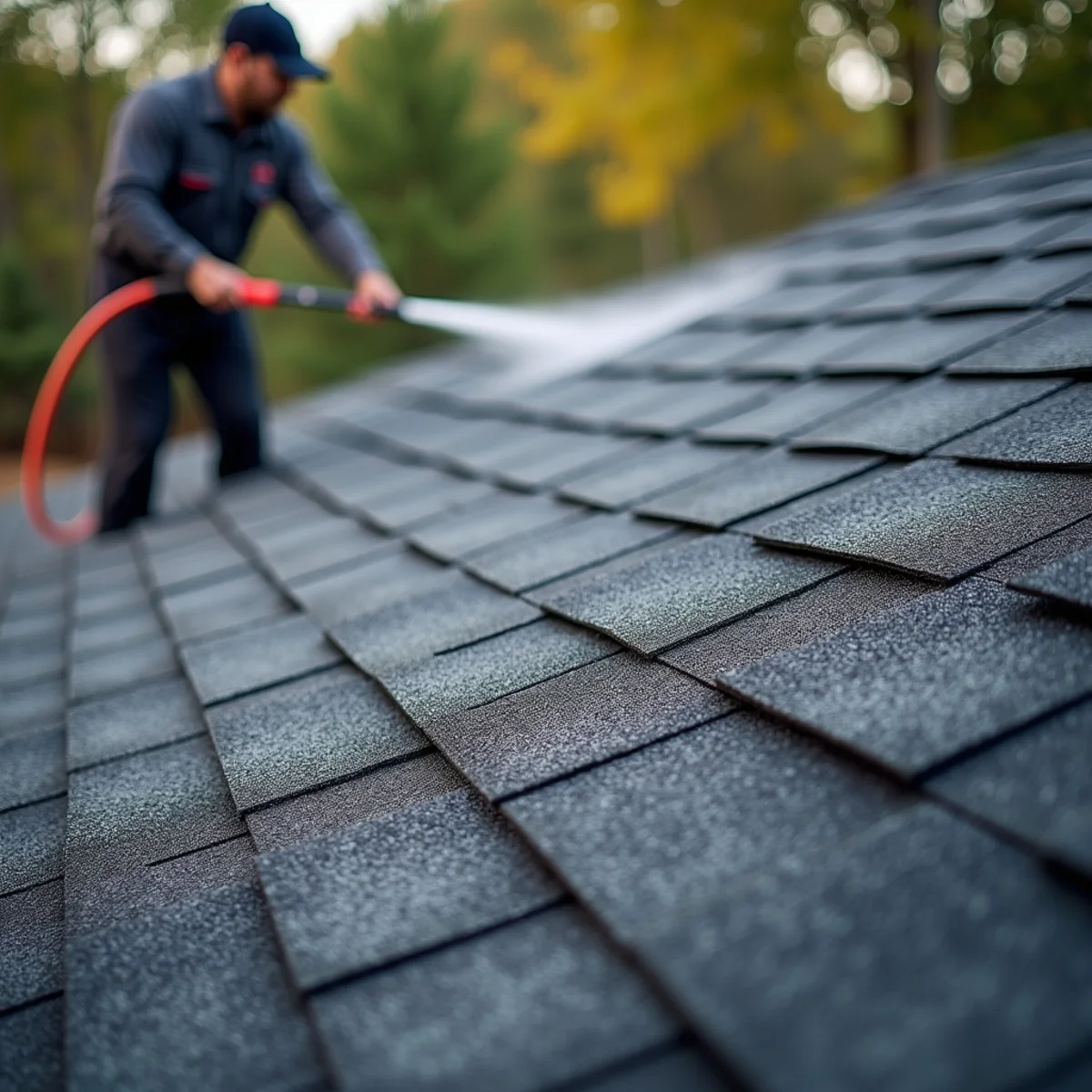
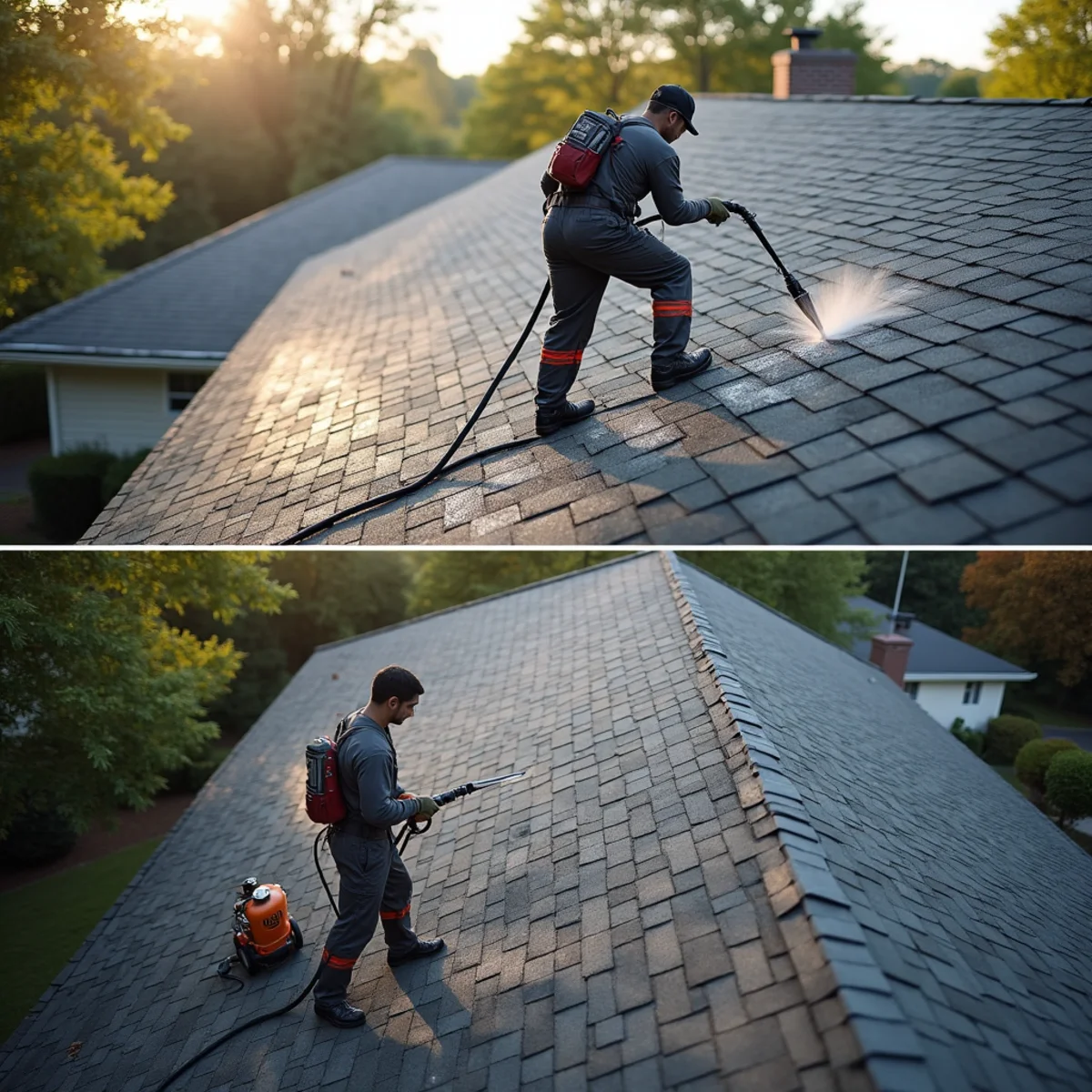
The right method is a soft wash: a cleaning solution applied at low pressure — closer to rainfall than a power washer — that kills the algae where it grows, followed by a gentle rinse. Heavy streaks typically lighten significantly right away, and remaining traces usually fade over the following weeks as rain carries off the dead growth. On every roof treatment we do, we pre-wet and protect landscaping before any solution goes on the roof.
Re-Roofing Soon? Algae-Resistant Shingles Exist
If your roof is near the end of its life anyway, ask your roofer about algae-resistant shingles. Most major manufacturers now offer lines with copper-infused granules blended into the surface. Copper ions release slowly in rainwater and suppress algae growth across the shingle face.
Resistance isn't immunity — heavily shaded slopes in a humid climate can still develop growth eventually — but algae-resistant shingles typically stay clean far longer than standard ones in Georgia conditions. For a roof that's staying put, though, cleaning is the practical answer. Replacing a functional roof over cosmetic streaks rarely makes sense when a soft wash addresses the same problem.
Frequently Asked Questions
Will the black streaks come back after cleaning?
Eventually, yes — the spores are airborne, so no cleaning permanently prevents regrowth. A proper soft wash kills the existing colonies at the root rather than just rinsing the surface, so roofs typically stay clean for a good stretch. How long depends on shade, tree cover, and how damp your lot runs.
Can I clean the streaks myself with bleach and a garden sprayer?
We'd advise against it. Getting solution mix, dwell time, and rinsing right takes practice, and overspray can hit landscaping hard if nothing is pre-wetted and protected. The bigger issue is safety: working from a ladder or walking a treated, slippery roof is genuinely dangerous. This is one job where hiring it out is the sensible call.
Do black streaks mean I need a new roof?
Usually not. Streaks are surface algae, not structural failure, and a streaked roof with plenty of life left just needs a proper cleaning. If your shingles are also curling, cracking, or shedding granules heavily into the gutters, have a roofer evaluate them — but the streaks alone aren't the deciding factor.
Do zinc or copper strips along the ridge stop the algae?
They can help slow regrowth on the area directly below the strip, since rain washes trace metal ions down the slope. Coverage is limited on larger roofs, and strips won't remove streaks that already exist. They pair reasonably well with a cleaning, but they're a supplement, not a fix.
Seeing Streaks on Your Shingles?
Send us a photo of your roof and we'll tell you whether it's algae, what a soft wash treatment involves, and what to expect — straight answers, no pressure.
Get a Free EstimateMore From the Resource Center
- What to Look for When Hiring a Pressure Washing CompanyMost pressure washing quotes look the same on paper. The differences that actually matter — method, protection, and accountability — only show up when you ask the right questions.View
- Exterior Cleaning Checklist Before Selling a HomeBuyers judge your home from the curb before they ever step inside — and listing photos are the new first showing. Here's the exterior cleaning checklist to work through before your home hits the market.View