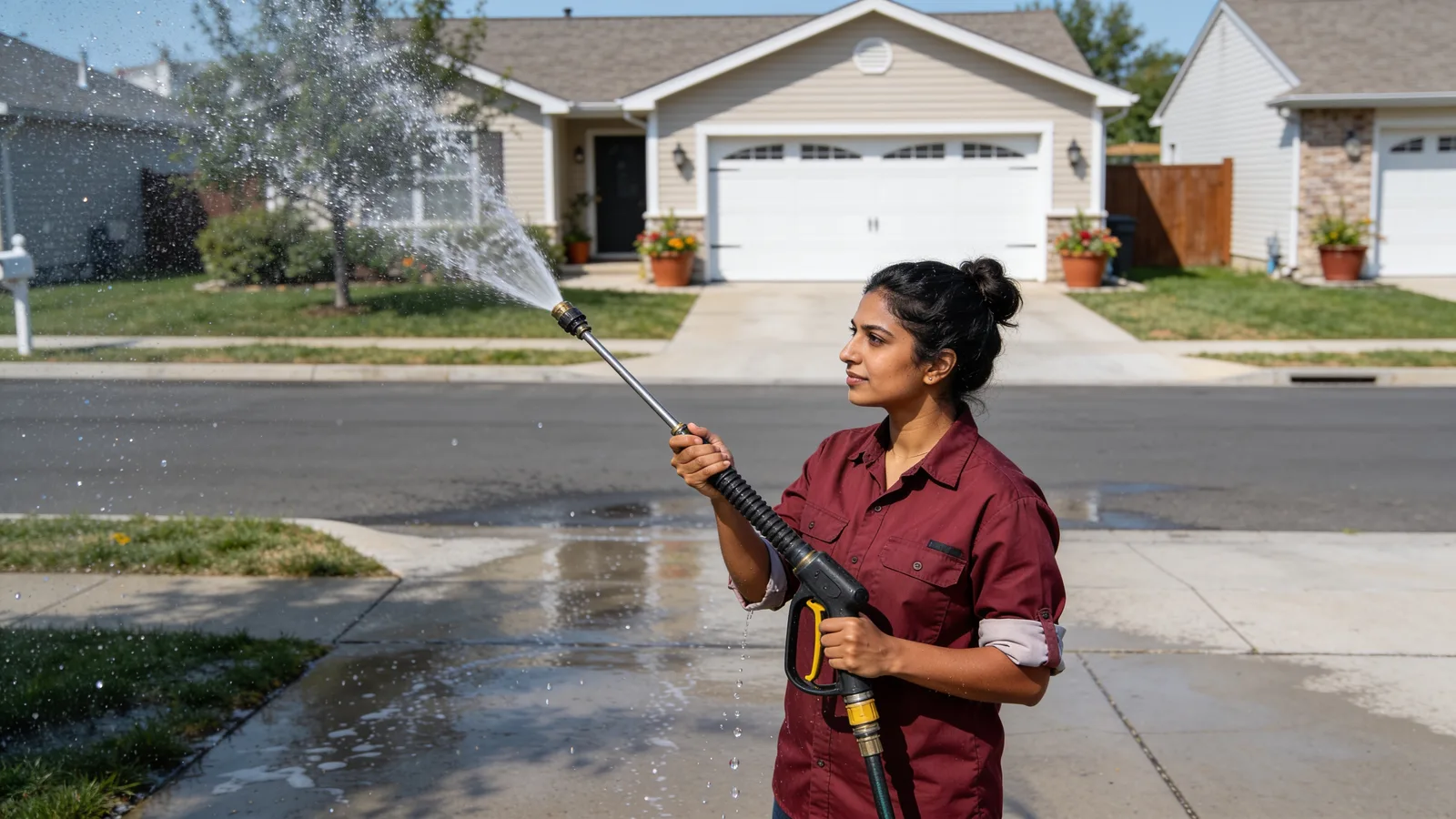
Pressure gets the attention, but flow does much of the work. PSI measures how hard the water hits. GPM measures how much water the machine moves. High pressure breaks grime loose; high flow carries it away. A machine with big PSI and weak flow tends to etch lines into concrete while leaving dirt behind.
Commercial crews pair the two with the right equipment:
- Surface cleaners. A round deck with spinning nozzles holds the spray at an even distance from the slab, so driveways and sidewalks come out without zebra striping.
- Hot water units. Heated water cuts grease and oil far better than cold, which matters at drive-thrus, loading docks and fuel pads.
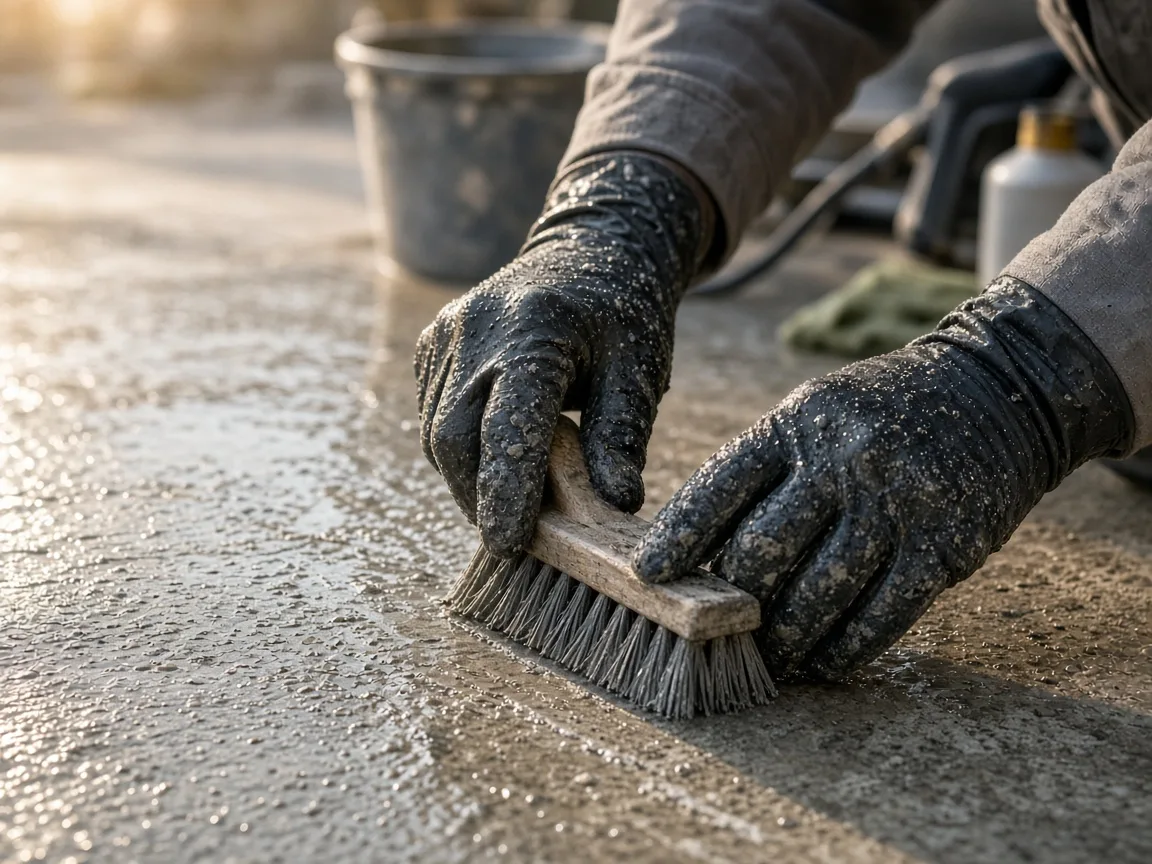
- Pre-treatments. Degreasers and detergents go on first and dwell before rinsing. Pressure alone rarely lifts an old oil stain.
- Gum tools. Steam or a hot, focused tip softens gum so it releases without gouging the surface.
Concrete age and finish change the plan as well. Broom-finished slabs handle more aggressive cleaning than stamped or sealed decorative concrete, which can lose color if the tip gets too close. When you book a pressure washing contractor in the U.S. through Redline Exterior Cleaning, describe the surface and the stains you're dealing with so the right rig shows up.