Driveways & Concrete
How to Remove Red Clay Stains From a Georgia Driveway
The Short Answer
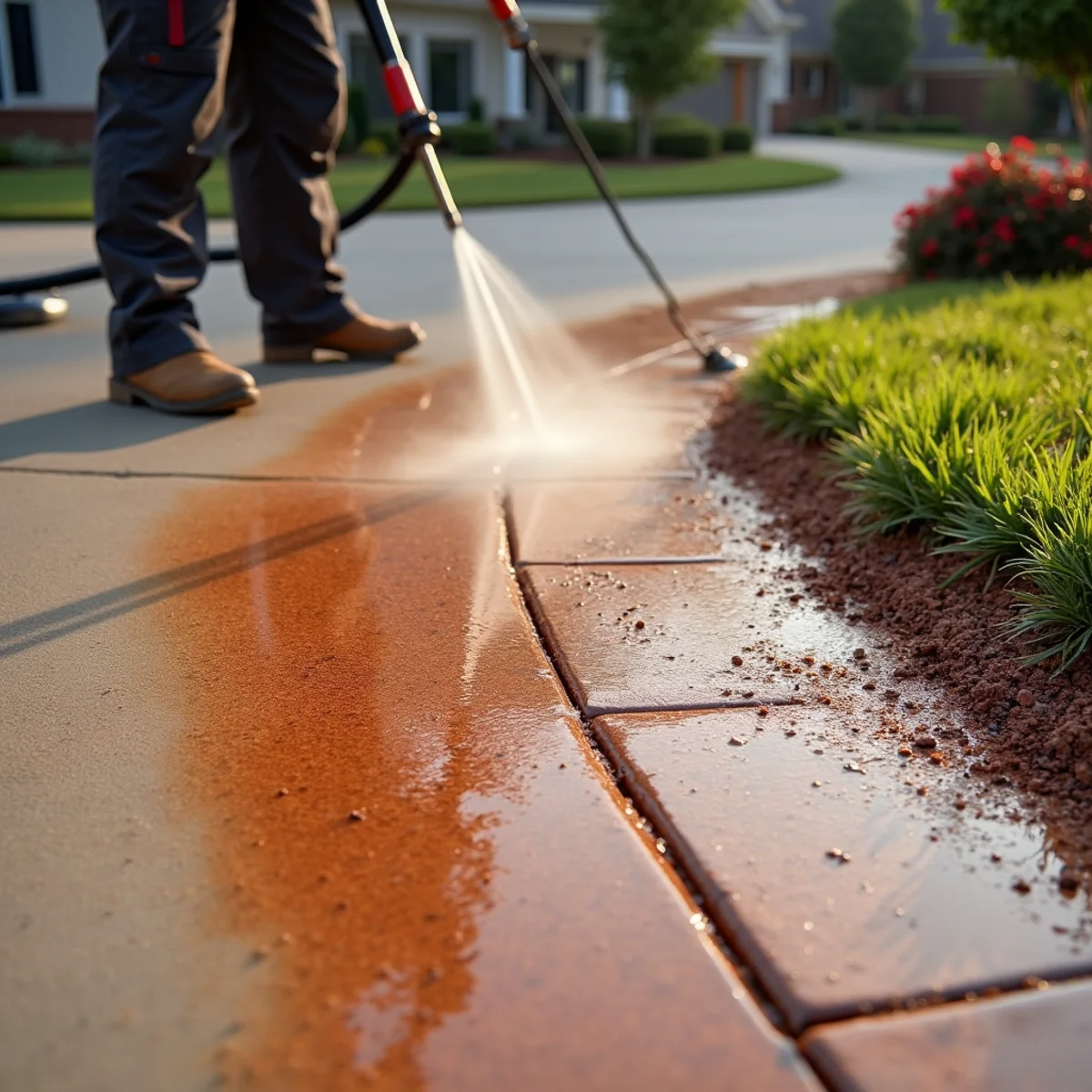
Red clay stains come out of concrete with chemistry first, pressure second. The orange color is iron oxide — essentially rust — that has soaked into the pores of the slab, so blasting it with water alone smears it or etches the concrete. The effective approach is a pre-treatment that dissolves the iron staining, followed by an even, controlled rinse with a surface cleaner. Fresh stains typically lighten dramatically; stains that have baked in for years usually improve a great deal but may leave a faint shadow.
Why Georgia Red Clay Stains Concrete So Badly
The red in Georgia clay is iron oxide — the same compound as rust. When clay-laden runoff washes across your driveway after a storm, the water evaporates but the iron pigment stays behind, wicking down into the pores of the concrete. That's the key problem: the stain isn't sitting on the surface. It's inside it.
Concrete is far more porous than it looks. Under magnification, a slab is a sponge of tiny capillaries, and fine clay particles are small enough to ride water right into them. Give the stain a few humid Georgia summers of sun and repeated wetting, and the iron effectively dyes the top layer of the slab orange.
That's why clay staining behaves so differently from mud, pollen film, or the black algae buildup we see on shaded North Metro driveways. Organic grime rinses or responds to a house-wash mix. Iron staining is mineral — it needs a cleaner that actually reacts with iron.
Why Blasting It With Pressure Fails — or Makes It Worse
The first instinct is usually to rent a pressure washer, put a narrow tip on it, and hold it close until the orange goes away. What actually happens is one of two things. Either the surface color smears and lightens slightly while the stain in the pores stays put, or the operator keeps stepping up the pressure until the concrete itself gives up before the stain does.
Etched concrete is a permanent problem. High pressure at close range erodes the smooth cream layer off the top of the slab, exposing the coarse aggregate underneath and leaving wand stripes you can see every time the driveway is wet. Worse, that roughed-up surface is even more porous — so the next round of clay runoff stains it faster and deeper than before.
The honest physics are simple: water pressure removes what's on a surface, not what's in it. Iron oxide locked inside the pores has to be chemically dissolved before any amount of rinsing will carry it away.
How We Approach Red Clay Stains on a Driveway
When we clean clay-stained concrete around Woodstock and Acworth, the visible washing is actually the second step. The first is pre-treatment: we apply a cleaner formulated to break the bond between iron oxide and the concrete, and we give it time to dwell and work into the pores. Before any of that, we pre-wet and protect landscaping along the driveway edges, since that's exactly where clay staining concentrates.
Once the chemistry has done its job, we clean the slab with a rotary surface cleaner at a pressure matched to the age and condition of the concrete — not the machine's maximum. The surface cleaner keeps the finish even across the whole driveway, so you don't trade an orange stain for a zebra pattern of wand marks.
The order matters more than the equipment. Chemistry loosens the stain, controlled pressure lifts and rinses it. Skip the first step and you're just redistributing iron with expensive water.
DIY Options — and Where They Fall Short
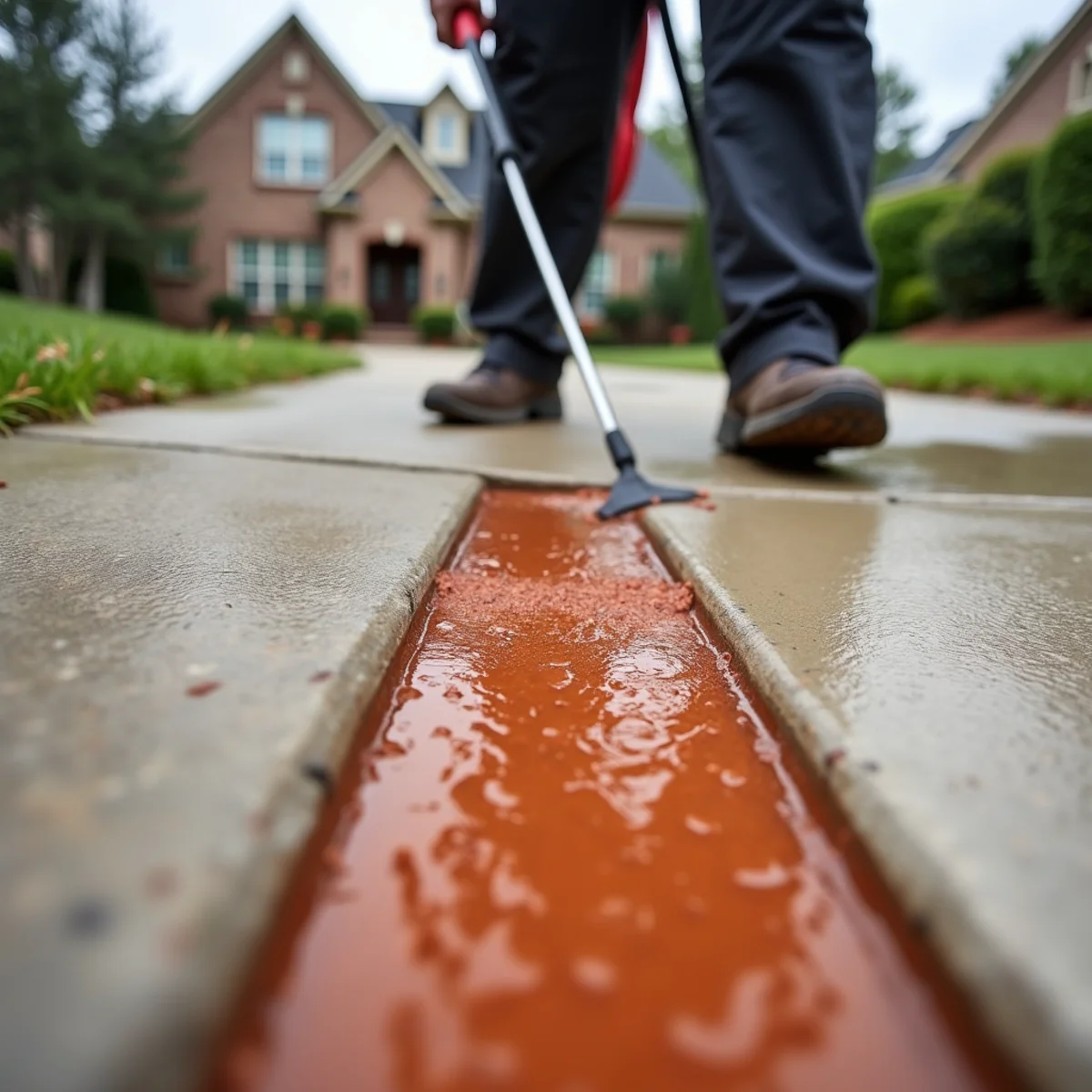
For a small, fresh clay mark, a homeowner can make real progress. The stain hasn't had time to migrate deep, so a stiff brush and the right cleaner may lighten it substantially before it sets.
The common DIY routes, roughly in order of effectiveness:
- Oxalic acid-based cleaners (often sold as wood brighteners or rust removers) — the most effective consumer option, because oxalic acid actually reacts with iron. Follow the label, keep it off plants, and rinse thoroughly.
- Commercial rust-stain removers for concrete — similar chemistry in a ready-made form; results vary by product and stain age.
- Dish soap, degreasers, or bleach — largely ineffective on iron. Bleach handles the organic grime around a clay stain, which can make the orange look even more pronounced afterward.
- Muriatic acid — it works, but it works by dissolving the concrete surface itself. It's easy to burn a pale, rough patch into the slab, and the fumes and runoff are hazardous. We don't recommend it for DIY use.
Keeping the Clay Off Your Concrete in the First Place
Every clay stain starts the same way: bare red dirt, moving water, and a concrete surface in the path between them. Around here that usually means a washed-out lawn edge, a downspout dumping onto exposed soil, or a construction lot next door shedding runoff. Fix the path and you mostly fix the stain.
The changes that make the biggest difference on the wooded, sloped lots common in Cherokee County:
- Establish grass or ground cover along driveway edges — bare clay next to concrete is the number-one source of staining we see
- Add a gravel or river-rock transition strip between exposed soil and the slab so runoff drops its sediment before reaching the concrete
- Redirect downspouts with extensions or drain pipe so roof water doesn't cross bare dirt on its way over your driveway
- Regrade or edge low spots where storm water habitually sheets across the pavement
- Consider a penetrating concrete sealer after a professional cleaning — it slows how quickly future clay can soak into the pores
Realistic Expectations for Old Stains
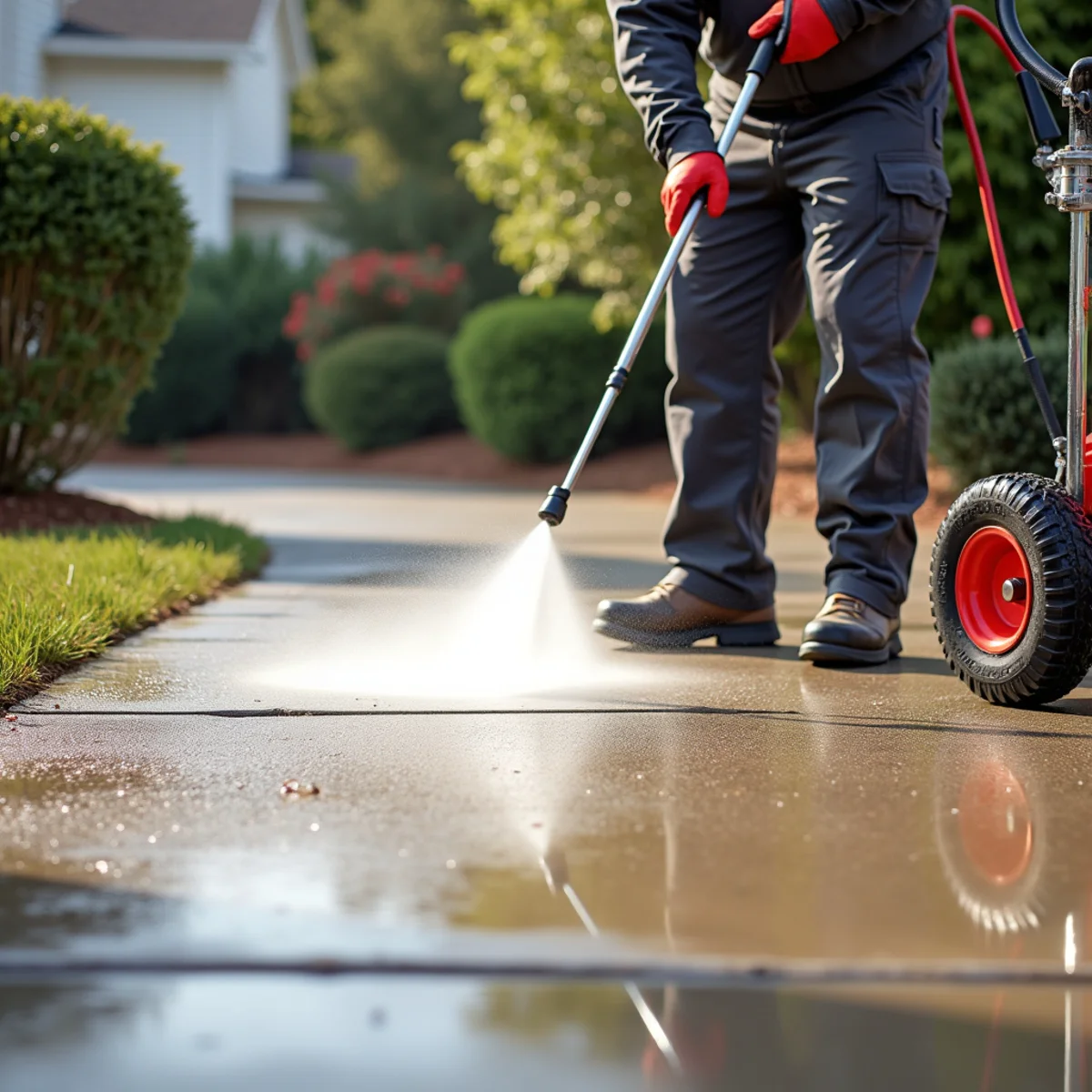
We'd rather be straight with you than overpromise: not every clay stain comes out completely. A stain from last month's storm typically cleans up dramatically. A stain that has been cycling through wet springs and baking summers for years has usually penetrated deep enough that even proper treatment may leave a faint warm shadow in the concrete.
The good news is that a faint, even shadow on a uniformly clean driveway reads very differently than a hard orange streak on a dingy one. In most cases the full clean — pre-treatment, surface cleaning, and an even rinse — makes the staining a detail you have to look for rather than the first thing you see from the street.
If you're unsure which category your driveway falls into, photos tell us a lot. Stain color, location, and how long it's been there let us give you an honest read on the likely outcome before anyone unloads a machine.
Frequently Asked Questions
Will a rented pressure washer remove red clay stains?
Usually not on its own. The iron oxide has settled deep into the concrete's pores, so pressure alone tends to smear it or lighten it slightly. Cranking up the pressure to compensate risks etching permanent marks into the slab. A cleaner that dissolves iron, followed by a controlled rinse, is the effective combination.
Does bleach remove red clay stains from concrete?
No. Bleach breaks down organic growth like algae and mildew, but red clay staining is mineral — iron oxide doesn't respond to it. Bleach can actually make the orange look more obvious by cleaning the grime around it. Oxalic acid-based cleaners are the right chemistry for iron.
How long can I wait before a clay stain becomes permanent?
The sooner the better. Fresh stains sit near the surface and typically respond very well to treatment. Stains left through multiple wet seasons migrate deeper into the pores, and while proper cleaning usually improves them significantly, very old staining may leave a faint shadow.
Will sealing my driveway stop future clay stains?
A penetrating sealer slows how quickly clay-laden water can soak into the pores, which typically makes future stains lighter and easier to clean. It works best applied to freshly cleaned concrete and paired with fixes at the source — edging, ground cover, and downspout redirection.
Tired of Looking at Orange Streaks?
Send us a photo of your driveway and we'll tell you honestly what a proper pre-treatment and surface clean can do for it — no pressure, no obligation.
Get a Free EstimateMore From the Resource Center
- What to Look for When Hiring a Pressure Washing CompanyMost pressure washing quotes look the same on paper. The differences that actually matter — method, protection, and accountability — only show up when you ask the right questions.View
- Exterior Cleaning Checklist Before Selling a HomeBuyers judge your home from the curb before they ever step inside — and listing photos are the new first showing. Here's the exterior cleaning checklist to work through before your home hits the market.View