
Roofs & Gutters
How Often Should Gutters Be Cleaned in North Georgia?

The Short Answer
For most North Georgia homes, plan on cleaning gutters twice a year: once in late fall after the leaves finish dropping, and again in spring once the pollen and oak tassels have come down. Homes on heavily wooded lots — common across Cherokee County — often need a third or even fourth cleaning, especially with pines overhead. And if water is already sheeting over the edges during rain, or plants are sprouting from the trough, don't wait for the calendar. Those gutters are overdue now.
The Short Answer: Twice a Year, Timed to the Trees
The baseline schedule for a typical North Georgia home is two cleanings a year. The first comes in late fall, after leaf drop is truly finished — around here that often means late November into December, since our hardwoods hang onto their leaves longer than people expect. Clean too early and you're paying to empty gutters that refill two weeks later.
The second cleaning belongs in spring, once the pollen wave and oak tassels have finished falling. Spring debris is sneakier than fall leaves: tassels, maple seeds, and pollen pack into a dense mat that holds water instead of letting it drain. Clearing that mat before summer thunderstorm season is the whole point.
Two cleanings, timed to those two debris seasons, keeps most gutters flowing all year. The exceptions — and there are plenty in Cherokee County — come down to what's growing over your roof.
Why the North Georgia Tree Canopy Is So Hard on Gutters
North Georgia neighborhoods are built into some of the densest tree cover in the Southeast. Mature oaks, maples, sweetgums, and poplars drop a heavy load every fall, and the loblolly pines scattered through almost every subdivision shed needles nearly year-round. A gutter under that canopy simply fills faster than one on an open lot.
Spring adds a second season most regions don't deal with at this intensity. Oak tassels come down by the bucketful, pine pollen coats everything in yellow, and the two combine into a paste that clings to gutter bottoms and downspout outlets.
Shade brings its own problem. On wooded lots, damp debris sits in the trough and slowly composts, and our humidity feeds the black and green streaking you see on gutter faces. That staining is why we offer gutter brightening as a separate exterior scrub — an interior clean-out alone won't touch it.
Warning Signs Your Gutters Are Overdue
You don't need a ladder to check on your gutters. Most of the tells are visible from the ground, especially during or right after a good rain:
- Water sheeting over the front edge during rain instead of running to the downspouts
- Gutters sagging, tilting, or pulling away from the fascia board
- Plants, grass, or even small tree seedlings growing out of the trough
- Dark vertical streaks — often called tiger stripes — on the outside faces
- Trenches or washed-out mulch in the beds directly below the roofline
- Little or no water coming out of a downspout while it's raining
- Mosquitoes hanging around the roofline on summer evenings
What Clogged Gutters Quietly Do to a House
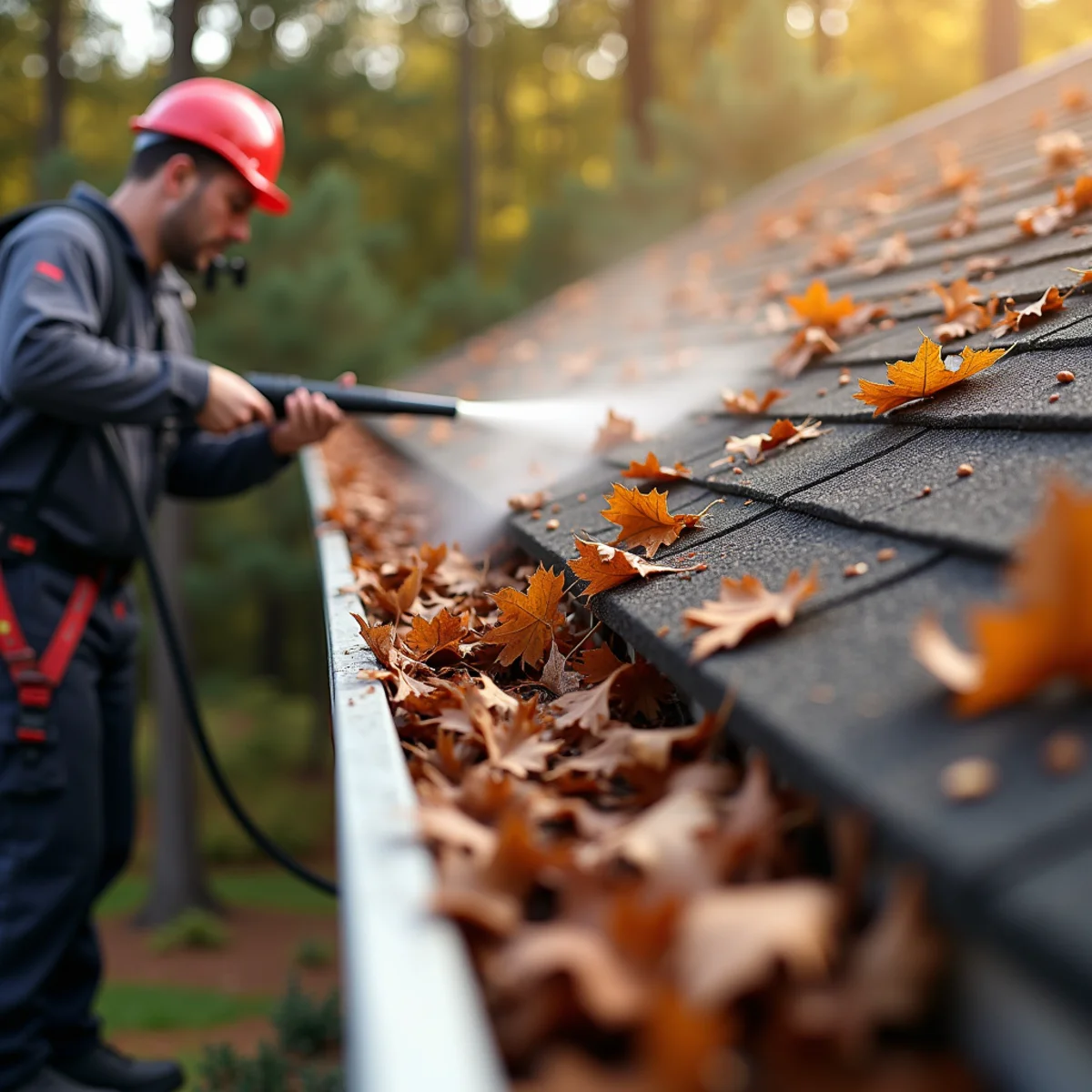
A clogged gutter isn't just full — it's a long, water-holding planter box bolted to your roofline. Water that sits against the fascia board soaks the wood over time, and rotted fascia is a far bigger repair than any cleaning. We regularly see soft, stained fascia on homes where the gutters went a couple of years untouched.
The ground takes a beating too. When gutters overflow, all that roof water dumps in a line right at the foundation. In our red clay soil, that typically means eroded beds, splash-stained siding, and water pooling against the slab or seeping toward the crawlspace — exactly where you don't want moisture in a humid climate.
Then there's the standing water itself. A blocked gutter in a Georgia summer can become a mosquito nursery a few feet from your back porch. And in winter, our occasional hard freezes can turn a water-logged gutter into a heavy block of ice that strains the hangers and can pull the run loose.
Wooded Lots: When Twice a Year Isn't Enough
If your home backs up to woods, sits under mature pines, or has a roof with valleys that funnel debris to one spot, two cleanings a year usually won't keep up. For those homes we typically suggest three or four visits — the standard fall and spring cleanings, plus a summer or mid-winter check depending on what's overhead.
Pine needles are the biggest repeat offender. They fall in every season, weave themselves into a mat, and settle right over the downspout outlets, so a gutter can look half-empty and still be functionally blocked. If we see a needle mat forming on a fall visit, we'll tell you honestly whether your lot needs a more frequent rotation.
Whatever the frequency, a proper cleaning should cover the whole system: debris scooped out by hand, every downspout flushed and confirmed flowing, and the mess bagged and hauled off — not blown into the yard.

Do Gutter Guards Change the Schedule? An Honest Take
Gutter guards reduce cleaning frequency — they don't eliminate it. That's the honest version, and it's not what most guard sales pitches say. Good guards keep out whole leaves, which is a real benefit under a hardwood canopy. But pine needles slip through or pile on top of many designs, and pollen, oak tassels, and shingle grit wash straight through the openings on plenty of others.
The catch is that guarded gutters clog invisibly. You can't glance up and see a full trough, so the first sign of trouble is often water pouring over the edge in a storm. If you have guards, we'd still recommend an inspection and clean-out on a regular schedule — usually less often than open gutters, but never zero.
If you're weighing an install, ask how the specific design handles pine needles and fine debris, because on most North Georgia lots that's what your gutters will actually face. We're happy to give a straight opinion on whether guards make sense for your trees.
Frequently Asked Questions
What months should I schedule gutter cleaning in North Georgia?
Late November through December for the fall cleaning, after the hardwoods finish dropping, and April into May for the spring cleaning, once pollen and oak tassel season winds down. Wooded lots often benefit from an extra visit in summer or mid-winter.
Can clogged gutters really affect my foundation?
Yes. Overflowing gutters dump concentrated roof water in a line right at the foundation. In North Georgia's red clay, that typically erodes beds, pools water against the slab, and pushes moisture toward crawlspaces. Keeping gutters flowing is one of the simplest forms of foundation drainage there is.
I have gutter guards — do I still need cleanings?
Yes, just usually fewer of them. Guards keep out whole leaves but not pine needles, pollen, tassels, or shingle grit on many designs, and because you can't see into a guarded gutter, clogs tend to go unnoticed until they overflow. Periodic inspections and clean-outs are still worth it.
What's included in a professional gutter cleaning?
A thorough job covers hand-scooping all debris from the troughs, flushing every downspout until it flows freely, and bagging and removing the debris. Cleaning the streaked outside faces is a separate service — that's gutter brightening, which scrubs off the oxidation and tiger striping.
Overflowing, Sagging, or Just Overdue?
Redline is firefighter-owned and based right here in Woodstock. We hand-clean the troughs, flush every downspout, and haul the debris away — so you can stay off the ladder. Reach out for a fast, no-pressure quote.
Get a Free EstimateMore From the Resource Center
- What to Look for When Hiring a Pressure Washing CompanyMost pressure washing quotes look the same on paper. The differences that actually matter — method, protection, and accountability — only show up when you ask the right questions.View
- Exterior Cleaning Checklist Before Selling a HomeBuyers judge your home from the curb before they ever step inside — and listing photos are the new first showing. Here's the exterior cleaning checklist to work through before your home hits the market.View