Driveways & Concrete
Can Pressure Washing Damage Concrete?
The Short Answer
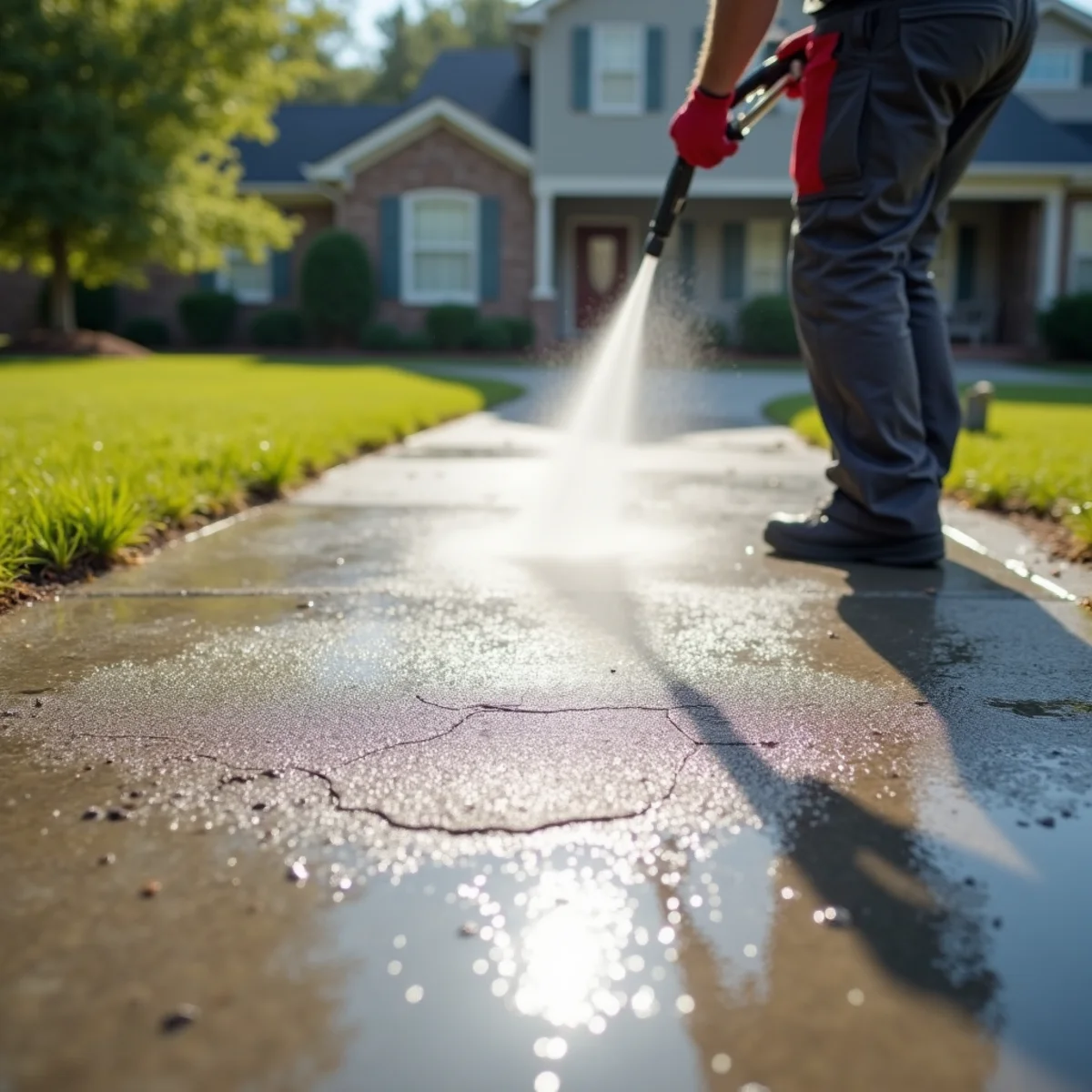
Yes — pressure washing can damage concrete, but only when it's done wrong. Too much pressure, the wrong nozzle, or a wand held too close can etch the surface, leave permanent stripe marks, and blast sand out of joints. Older, weathered slabs are the most vulnerable. Done correctly — with a surface assessment first, pressure matched to the slab, and a rotary surface cleaner that spreads the force evenly — pressure washing cleans concrete without harming it. And when a slab is already spalling or flaking, a cleaning reveals that existing damage rather than causing it.
The Honest Answer: Yes, When It's Done Wrong
Concrete is one of the most durable surfaces on your property, which is exactly why people assume it can take anything. It mostly can. But concentrated water pressure is a cutting force, and enough of it, close enough to the surface, will carve into the top layer of any slab.
Here's the part that should reassure you: every type of pressure washing damage has a known cause, and every cause is preventable. When we clean driveways around Woodstock and the rest of Cherokee County, the difference between a clean slab and a damaged one comes down to assessment, equipment, and technique — never luck.
So the useful question isn't whether pressure washing can damage concrete. It's what that damage looks like, why it happens, and how to make sure it doesn't happen on your driveway.
What Concrete Damage Actually Looks Like
Pressure washing damage rarely shows up as dramatic cracks. It shows up as texture and tone — subtle at first, obvious once the surface dries. These are the failure modes we see most often on driveways that were cleaned carelessly:
- Etching — a narrow or zero-degree tip held too close cuts shallow grooves into the smooth top layer, leaving rough scars that catch dirt faster than the surrounding surface
- Wand lines — uneven, overlapping wand passes leave permanent light-and-dark stripes, sometimes called zebra striping, that only appear once the concrete dries
- Raveling — on older or weak-surfaced concrete, excess pressure tears out fine aggregate and leaves a sandy, pitted texture behind
- Blown-out joints — careless passes strip the sand from paver joints and can erode soft, aged mortar along brick borders and steps
Why Some Slabs Are More Vulnerable Than Others
A five-year-old broom-finished driveway and a slab poured decades ago are not the same surface, even if they look similar under a layer of grime. Concrete weathers from the top down. The smooth upper layer — finishers call it the cream — gradually thins with age, sun, and traffic, and once it's thin, it takes far less force to tear it open.
Georgia conditions add their own pressure, so to speak. Humid summers grow a slick film of algae and mildew on shaded slabs, especially on wooded lots, and red clay runoff bonds into the pores. Both tempt people to lean in with more pressure than the surface can handle. Our occasional winter freeze-thaw cycles matter too: water that soaks into an unsealed slab and freezes weakens the surface a little each year.
Brand-new concrete sits at the other end of the spectrum. A fresh pour needs time to fully cure before it should be pressure washed at all — washing too early can mar a surface that would have handled the same cleaning easily a season later.
How Professionals Clean Concrete Without Hurting It
Good concrete cleaning starts before the machine does. We walk the surface first, looking at age, finish, existing wear, cracks, and staining, then test our settings in an out-of-the-way spot. The machine gets matched to the slab — not run wide open because it can be.
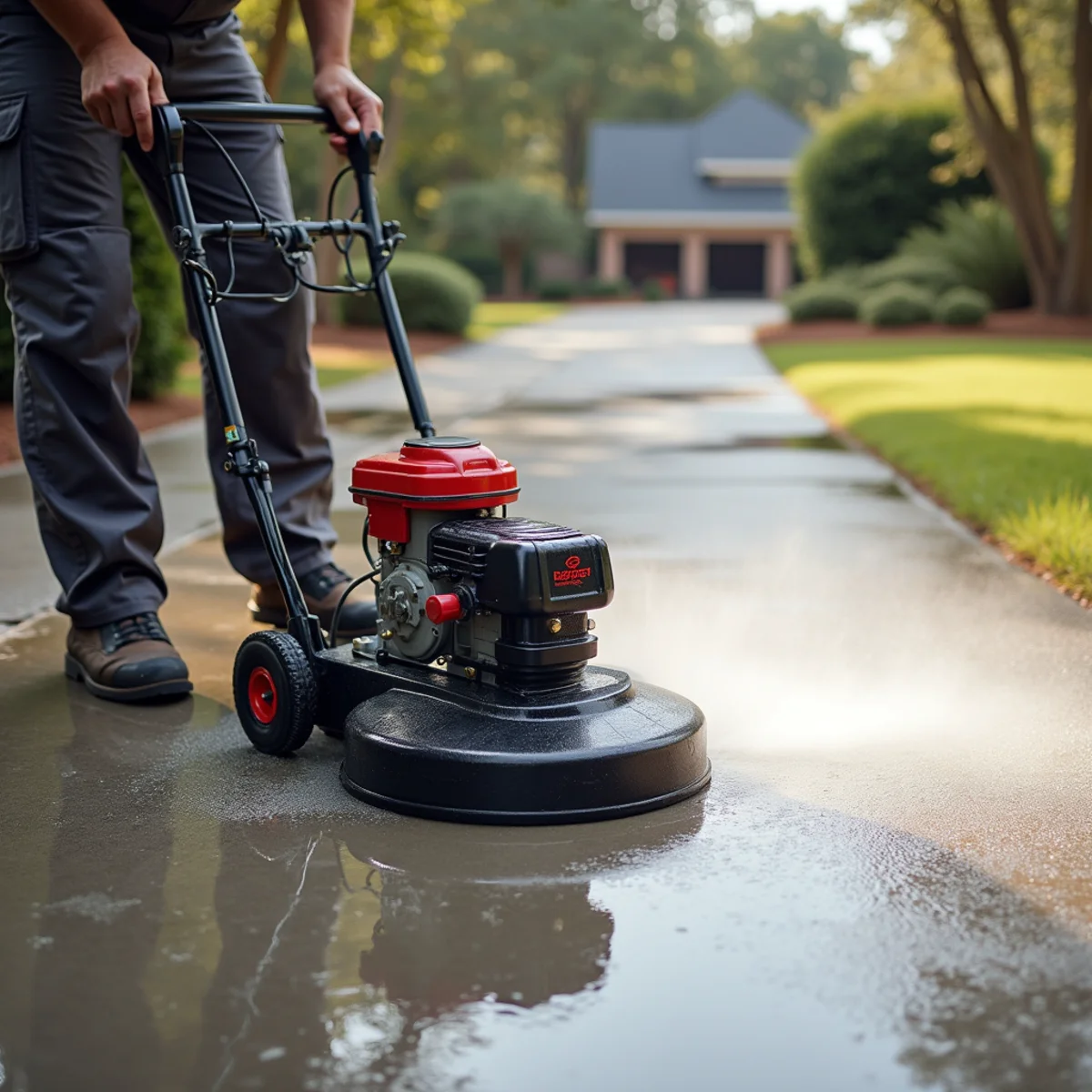
The single biggest safeguard is the rotary surface cleaner. Instead of a handheld wand concentrating force on one small point, a surface cleaner spins nozzles under a shrouded deck at a fixed height, spreading the pressure evenly across the whole path. That's what produces the uniform, stripe-free finish — and it's why we treat the wand as a detail tool for edges, not the main event.
Chemistry does the rest. Pre-treating algae, mildew, and red clay staining loosens the grime before the water ever touches it, which means the surface needs less force, not more. We pre-wet and protect landscaping along the borders while we work. It's a methodical, checklist-driven way to clean — a habit that carries over naturally from the owner's firefighting background.
- Assess the slab and test in an inconspicuous spot before committing
- Match pressure to the concrete's age and condition, not the machine's maximum
- Use a rotary surface cleaner to distribute force evenly at a consistent height
- Pre-treat organic growth and clay stains so less pressure does more work
- Keep wand work wide-angled, moving, and at a consistent distance on edges
When Cleaning Reveals Damage Instead of Causing It
Sometimes a homeowner sees pitting, flaking, or exposed gravel after a wash and assumes the cleaning caused it. Usually, the cleaning uncovered it. Spalling — where the top layer of concrete flakes away — comes from age, moisture, freeze-thaw stress, or finishing problems that go back to the original pour. A coat of algae and dirt hides it well. A clean surface doesn't.
This is why the walkthrough matters. If we see a slab that's already spalling or raveling, we say so before any water hits it, explain what the cleaning will and won't do, and let you decide. A wash typically improves how a worn slab looks, but it can't rebuild a failing surface — and we'd rather tell you that in the driveway than have you discover it after we leave.
If You're Doing It Yourself, Read This First
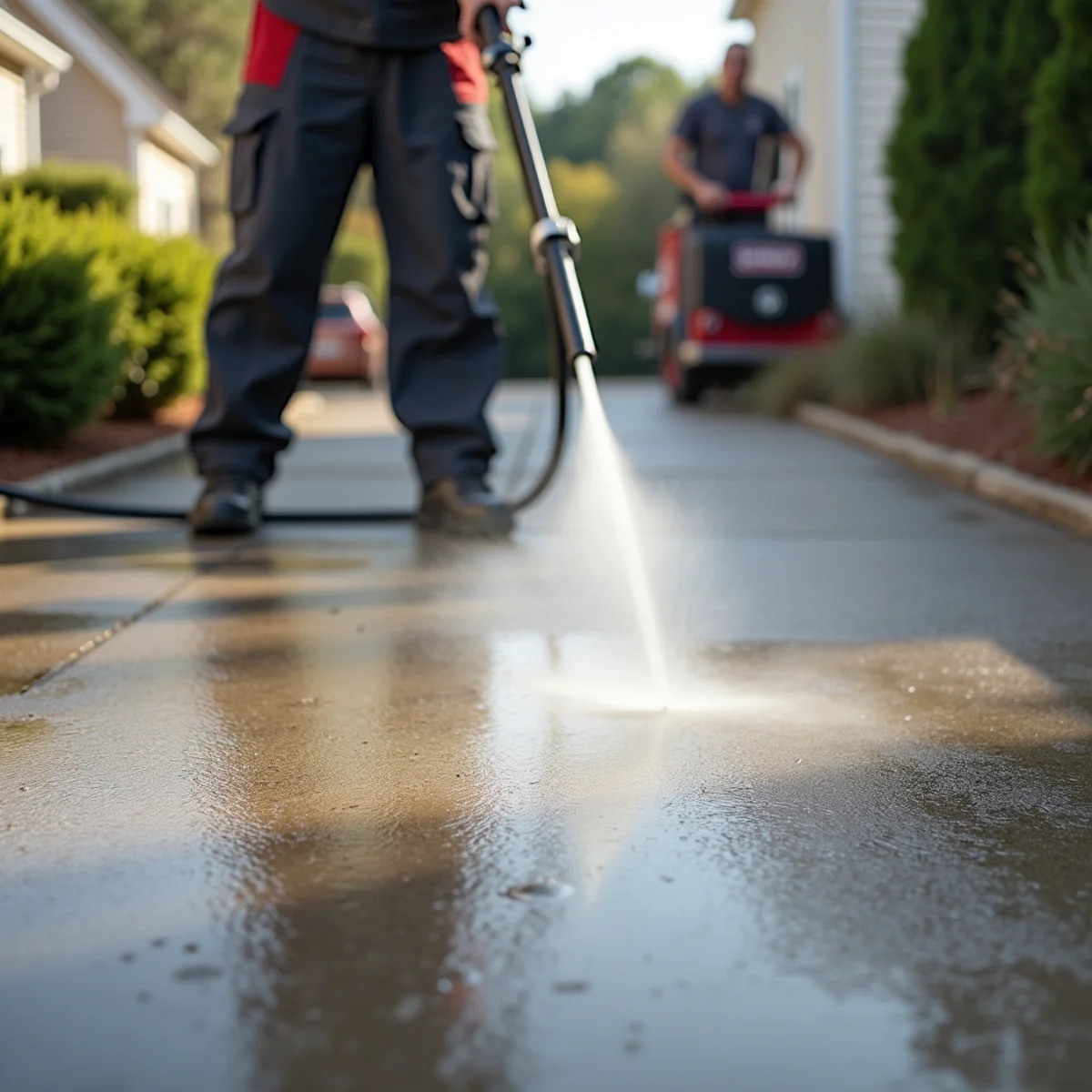
Plenty of homeowners around North Metro Atlanta rent a pressure washer for a weekend, and concrete is the most forgiving surface to learn on. It's still worth respecting a few rules, because the mistakes above are permanent and most of them happen in the first ten minutes.
- Never put a zero-degree (red) tip on concrete — it cuts, full stop
- Keep the nozzle moving and at a consistent distance; hovering over one spot is how etching starts
- Test your setup in a corner nobody sees before touching the middle of the driveway
- Don't chase a stubborn stain by moving closer — pre-treat it and let the cleaner work instead
- Wet down nearby plants before you start and rinse them after, since runoff carries whatever you're washing off
When It's Worth Calling a Pro
A wand-only DIY wash on a big driveway almost always dries with visible stripes, because holding perfect overlap and distance for hundreds of square feet by hand is genuinely hard. If the slab is older, stamped, decorative, or made of pavers, the margin for error shrinks further — those surfaces punish guesswork.
Redline Exterior Cleaning is firefighter-owned and based in Woodstock, serving Cherokee County and the North Metro Atlanta area. We're happy to look at photos of your concrete and tell you honestly whether it's a straightforward cleaning, a fragile surface that needs a gentler approach, or a slab whose problems no wash will solve.
Frequently Asked Questions
Can pressure washing crack a concrete driveway?
No — cracks come from soil movement, tree roots, settling, and age, not from water pressure. What a cleaning can do is make existing hairline cracks more visible once the grime that was hiding them is gone. That's information, not damage.
Is it safe to pressure wash stamped or decorative concrete?
It requires more care than a plain slab. Stamped and decorative concrete is usually sealed, and aggressive pressure can strip the sealer or scar the pattern. We clean these surfaces at reduced pressure with more reliance on pre-treatment, and we recommend against learning on them with a rental machine.
Will pressure washing remove the sand between my pavers?
Careless washing will, yes. Joint sand sits loose by design, and a direct high-pressure hit blasts it out. We adjust angle and pressure over paver joints to limit loss, and if a paver surface is heavily soiled, some re-sanding afterward is a normal part of the job to plan for.
How often should concrete be cleaned in Georgia?
Most driveways in our area benefit from a yearly cleaning. Humidity, pollen, and shade from wooded lots mean algae and grime return faster here than in drier climates — a slab under heavy tree cover typically needs attention sooner than one in full sun.
Not Sure Your Concrete Can Take a Cleaning?
Send us a couple of photos of your driveway or patio. We'll tell you honestly whether it needs a careful professional cleaning, a gentler approach, or something more than a wash — free, with no obligation.
Get a Free EstimateMore From the Resource Center
- What to Look for When Hiring a Pressure Washing CompanyMost pressure washing quotes look the same on paper. The differences that actually matter — method, protection, and accountability — only show up when you ask the right questions.View
- Exterior Cleaning Checklist Before Selling a HomeBuyers judge your home from the curb before they ever step inside — and listing photos are the new first showing. Here's the exterior cleaning checklist to work through before your home hits the market.View